
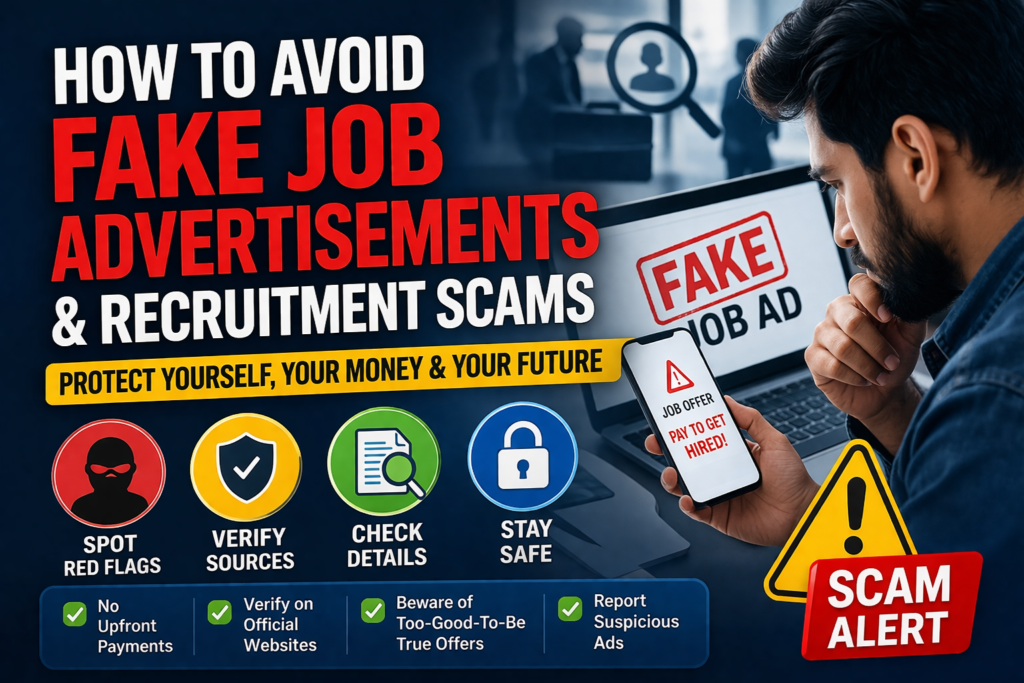
With unemployment rising and competition increasing, job seekers are applying more actively than ever before. Unfortunately, this has also led to a rise in fake job advertisements and recruitment scams targeting desperate candidates. Every year, thousands of applicants lose money, personal information, and opportunities because they fail to recognize warning signs of fraudulent job offers.
Understanding how real government and private sector recruitment works is one of the strongest protections against scams. Genuine employers follow transparent procedures, while scammers usually create urgency, demand money, or avoid verifiable information.
This guide explains how fake job advertisements work, how to identify them, and the practical steps every candidate should take to stay safe during their job search.
Why Job Scams Are Increasing
Recruitment scams are increasing mainly because applying for jobs has become easier through social media, WhatsApp groups, and online job portals. While this improves access to opportunities, it also allows fraudsters to target job seekers easily.
Common reasons scams are growing include:
- High unemployment rates
- Lack of awareness among applicants
- Fake social media job pages
- Unauthorized agents posing as recruiters
- Fake websites copying government organizations
- Applicants not verifying sources
Scammers rely on urgency and emotions. They know that people searching for jobs may react quickly without proper verification.
Most Common Types of Job Scams
1 Fake Government Job Advertisements
This is one of the most common scams. Fraudsters copy real government advertisements and modify contact details to redirect applicants to fake agents.
Real government recruitment never asks for payments through personal bank accounts or mobile wallets.
Understanding how official recruitment works — such as structured hiring seen in legitimate opportunities like Punjab Enforcement and Regulatory Authority PERA Jobs — helps candidates identify authentic processes versus fake offers.
2 Application Fee Fraud
Scammers often demand:
- Processing fees
- Interview confirmation fees
- Security deposits
- Training fees
They claim payment is required to confirm your application.
Reality:
Legitimate employers either charge official test fees through recognized testing services or do not charge anything at all.
3 Fake Appointment Letters
Some fraud networks send fake offer letters that look official. They use logos, stamps, and signatures copied from real organizations.
They may then request:
- Medical fees
- Joining processing fees
- Document verification charges
Always verify appointment letters through official websites.
4 WhatsApp Job Offers
If someone offers you a job directly on WhatsApp without a formal application process, it is almost always fake.
Common red flags:
- No interview
- Immediate hiring
- High salary promises
- Request for CNIC photos immediately
Professional employers do not recruit randomly through messaging apps.
5 Overseas Job Scams
Many scams involve fake overseas opportunities promising high salaries.
Fraudsters may request:
- Visa processing fees
- Agent charges
- Travel arrangements
Always verify overseas recruiters through official labor registration authorities.
Major Warning Signs of Fake Job Advertisements
Every job seeker should remember these danger signals:
Payment Requests
If any recruiter asks for money outside official channels, it is a strong warning sign.
No Official Website
Real organizations always have verifiable websites.
Unprofessional Communication
Warning signs include:
- Poor grammar emails
- Generic greetings
- Suspicious email domains
Example:
Real email: hr@company.com
Fake email: companyhr@gmail.com
Unrealistic Salaries
If salary sounds too good for your experience level, verify carefully.
No Proper Selection Process
Real hiring usually includes:
- Application review
- Test or interview
- Verification
Scams skip these steps.
How Real Government Recruitment Works
Understanding legitimate recruitment processes is the best protection against fraud.
Real government jobs usually include:
- Official advertisement
- Clear eligibility criteria
- Application deadlines
- Transparent selection process
- Merit lists
Government jobs also follow structured pay systems such as the Basic Pay Scale structure explained in this guide about BPS Basic Pay Scale System in Pakistan, which scammers rarely understand or mention correctly.
Steps to Verify Any Job Advertisement
Step 1 Check Official Website
Always search the organization’s official website.
If the job is not listed there, be cautious.
Step 2 Verify Through Newspaper Source
Most government jobs are published in major newspapers.
Step 3 Check Contact Details
Verify official phone numbers and emails.
Step 4 Search Organization Name + Scam
Sometimes victims report scams online.
Step 5 Never Rush
Scammers create urgency.
Real recruiters allow reasonable time.
Documents You Should Never Share Immediately
Never share these documents without verification:
- CNIC copy
- Passport
- Bank details
- Personal address details
- Family information
Only provide documents after confirming legitimacy.
How Scammers Manipulate Candidates
Understanding psychological tricks helps avoid fraud.
Urgency Pressure
“Submit fee today or lose opportunity.”
Authority Pressure
They pretend to be officers.
Opportunity Pressure
“Limited seats available.”
Fear Pressure
“Your application will be rejected.”
Recognizing these tactics prevents mistakes.
Safe Job Search Practices
Follow these safe habits:
- Apply through official portals
- Verify advertisements
- Use trusted job websites
- Avoid agents promising guaranteed jobs
- Research employers
- Keep records of applications
What To Do If You Encounter a Fake Job
If you suspect fraud:
- Do not send money
- Stop communication
- Report the advertisement
- Warn others
- Block contacts
Quick action prevents losses.
What To Do If You Already Paid Money
If you already paid:
- Contact your bank immediately
- Report to FIA cyber crime wing
- Keep transaction proof
- Save communication records
Recovery is difficult but early reporting helps.
Golden Rules Every Job Seeker Must Remember
Remember these simple rules:
- Jobs do not require secret payments.
- Government jobs never use personal accounts.
- Real employers do not guarantee selection.
- Professional hiring takes time.
- If it sounds too easy, it is suspicious.
Why Awareness Is Your Best Protection
Most victims are not careless — they simply lack awareness.
Educated applicants who understand recruitment systems rarely fall victim to scams.
Knowledge of hiring processes, pay structures, and official procedures acts as strong protection.
Final Advice for Job Seekers
Job searching requires patience and careful decisions. Rushing toward offers without verification can lead to financial loss and disappointment.
Smart candidates always verify before applying, understand recruitment procedures, and rely only on trusted sources.
If you stay cautious, informed, and patient, you can protect yourself from scams and focus on real career opportunities.
Key Takeaway
Fake job advertisements succeed because they exploit urgency and lack of awareness. Always verify job sources, avoid payments, and trust only transparent recruitment processes. A careful and informed approach is the strongest defense against recruitment fraud.